UTSA men to play an exhibition at Southern Cal on Oct. 15

By Jerry Briggs
Special for The JB Replay

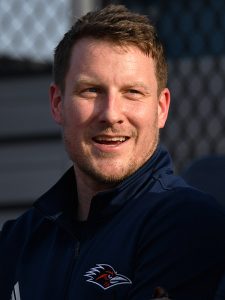
Coach Austin Claunch and the UTSA Roadrunners will play an exhibition game at the University of Southern California in Los Angeles on Oct. 15, the schools announced Sunday.

For both Claunch and USC’s Eric Musselman, the exhibition will mark a new beginning in their coaching careers, as they will represent their respective schools in front of fans for the first time. The game will be streamed live via the Big Ten Network on B1G+.

Tipoff at the Galen Center is scheduled for 9 p.m. central time.

Austin Claunch. The UTSA men's basketball team on Friday, Oct. 4, 2024, at the Convocation Center. - photo by Joe Alexander

UTSA coach Austin Claunch will lead his team into Los Angeles on Oct. 15 for an exhibition against the University of Southern California Trojans. – File photo by Joe Alexander

Claunch is in his first season at UTSA after spending a year as an assistant at the University of Alabama and, previously, for five seasons as head coach at Nicholls State. Musselman has worked as a head coach at the highest level of college basketball for nine years, including four at Nevada and the last five at Arkansas.

Musselman’s teams made three NCAA tournaments at Nevada and three more Arkansas. Coaching at Arkansas in the Southeastern Conference, his Razorbacks reached the NCAA round of eight in both 2021 and 2022 and the round of 16 in 2023.

After years in the Pac 12 conference, Southern Cal is entering its first season of basketball in the Big Ten. As such, the game will be streamed live via the Big Ten Network.

For Roadrunners’ fans hoping to attend the game in Los Angeles, ticketing information will be posted on the UTSA men’s basketball schedule page as it becomes available.

UTSA last played at USC in December of 1983. In the Roadrunners’ third year of basketball, they lost 84-68 in what has been their one and only meeting with the Trojans.

‘Smurf’ stands tall in early UTSA fall camp basketball practices

Marcus Millender. The UTSA men's basketball team on Friday, Oct. 4, 2024, at the Convocation Center. - photo by Joe Alexander

Marcus ‘Smurf’ Millender played 32 games and averaged 9.7 points as a freshman last year at South Alabama. He also shot 42.3 percent from the three-point arc for the Jaguars of the Sun Belt Conference. – Photo by Joe Alexander


By Jerry Briggs
Special for The JB Replay

What UTSA point guard Marcus Millender may lack in size, he seems to more than make up for it with a variety of enticing skills.

He runs the offense well when called on to do so. He shoots it with confidence from the perimeter, sometimes well beyond the three-point arc, and he just brings a consistent effort to practice each and every time the Roadrunners hit the floor at the Convocation Center.

At least, that’s been my observation in three or four practices that I’ve seen in fall camp workouts.

“He’s had consistent practices because he’s a consistent worker,” first-year UTSA coach Austin Claunch said after Friday’s session at the Convocation Center. “There he is. He’s shooting right now after practice. He’s somebody that really fits our style of play. Then on top of that, he’s a relentless worker.”

On a day that happened to be exactly one month before the team opens the season on Nov. 4 against Trinity, Millender dug into his bag of tricks.

Austin Claunch. The UTSA men's basketball team on Friday, Oct. 4, 2024, at the Convocation Center. - photo by Joe Alexander

Coach Austin Claunch says the Roadrunners have made good progress in the past week despite minor injuries to two of their best athletes. – photo by Joe Alexander

First, he drove into the paint, drew a defender, and then wrapped a pass around him to a teammate for a layup. Millender also knocked down three-balls in shooting drills and added one long one during half-court, five-on-five.

Never mind that his nickname is “Smurf.” Defenders seem to have a hard time stopping him because of his versatility.

Last season, the 5-foot-11 Millender averaged 9.7 points, 3.3 assists and 2.9 rebounds in 32 games for the South Alabama Jaguars. He knocked down 32 of 73 shots from the arc for 42.3 percent.

On April 26, Millender entered the NCAA transfer portal. The former standout at Houston Legacy High School wanted a new start under Claunch, who at the time had just arrived on the UTSA campus.

“He shows up every single day with the right mentality,” the coach said. “Great attitude. Obviously, he’s playing at a really high level right now.”

Working around injuries

A few injuries have cropped up in the past week. Point guard Primo Spears and guard-forward Sky Wicks were in walking boots and didn’t practice Friday.

Still, Claunch said he’s pleased after a little more than a week of the official fall camp. “It was a good week,” Claunch said. “On the offensive side of the ball, (we’re) just doing simple things better. Valuing the ball. Not turning it over. Passing and catching better. Creating better shots against different types of ball-screen coverages. You know, we’re banged up a little bit. Nothing major. It’s kinda that time of year.”

Claunch decided to hit the pause button on holding any scrimmages until Spears and Wicks, both expected to be key players for the Roadrunners, can return to form. “We wanted to get everybody 100 percent before we headed into some important scrimmages over the next few weeks,” he said.

Stepping up intensity

Small forward Damari Monsanto and point guard Paul Lewis were much more involved in Friday’s practice than they were this time a week ago.

Damari Monsanto. The UTSA men's basketball team on Friday, Oct. 4, 2024, at the Convocation Center. - photo by Joe Alexander

Wake Forest transfer Damari Monsanto was one of the top three-point shooters in the ACC two years ago. – Photo by Joe Alexander

“Damari’s really starting to get himself back into shape,” Claunch said. “He’s not where he needs to be, but he’s miles ahead of where he was when he got here. And because of that, he’s playing better.”

In three previous seasons at Wake Forest, Monsanto has suffered two serious injuries, including a torn Achilles and a knee injury. Two years ago, after returning from the Achilles problem, he broke out as one of the top long-distance shooters in the Atlantic Coast Conference. But after going down with the knee problem, he sat out for a year before returning to play in a limited role at the end of last season.

“He’s obviously an elite shooter,” Claunch said. “He’s a really underrated passer. Got an incredible basketball IQ and just knows how to play.”

Paul Lewis. The UTSA men's basketball team on Friday, Oct. 4, 2024, at the Convocation Center. - photo by Joe Alexander

Virginia native Paul Lewis played 31 games last season at Vanderbilt in the Southeastern Conference. Photo by Joe Alexander

Lewis, a transfer from Vanderbilt, has been slowed at UTSA with a foot injury.

“He looks great,” Claunch said. “He’s had two really, really good days. This is a long season, and it’s really good to have another ball handler. It was good to have him back out here. Got to keep him healthy.”

Notable

The NCAA announced on Wednesday that San Antonio will be the site for two major Division I events — the 2026 Women’s Volleyball Championship and a 2027 NCAA Basketball Regional. San Antonio has previously hosted two NCAA Volleyball Championships (in 2005 and 2011) and 11 men’s basketball regionals. The volleyball championship will be held in the Alamodome and the regional will be held in the Frost Bank Center.

The announcement comes as the San Antonio Local Organizing Committee (SALOC) prepares to host the 2025 Men’s Basketball Final Four in the Alamodome April 5 and 7. SALOC, which is a partnership between UTSA, the City of San Antonio, Visit San Antonio and San Antonio Sports, has hosted events that have generated hundreds of millions of dollars for the local economy.

Austin Claunch’s lesson for the day: ‘Separate yourself with effort’

By Jerry Briggs
Special for The JB Replay

One play during a halfcourt defensive drill Friday afternoon pretty much underscored the Austin Claunch way of playing basketball.

Guard Tai’Reon Joseph came out to contest the dribble on the wing. Forward David Hermes also switched out to stop the ball, forcing a pass to the top of the key. A driver put his head down and tried to maneuver into the lane, only to run into heavy traffic.

Bodies collided. Guard Marcus Millender, who cut off the driver, tumbled to the court. Falling on top of another body, he somehow managed to find the ball on the floor, and Millender gained possession. Overseeing the action, Claunch obviously liked what he saw.

“Separate yourself with effort,” the coach said to the group.

And so it went on Day 2 of UTSA’s official fall camp practices under Claunch, a first-year head coach.

“I’m pleased,’ the coach said. “I love how hard we practice. That’s obviously going to be a staple of what we want to be and the identity that we want to play with. We’re really deep. Everybody. I think the level of competition is great the way we’re pushing each other.

“To me it’s not pushing guys down. It’s raising everybody up. That’s an exciting thing for a coach. Two days in, I’m really excited. We got a lot of work to do like everybody, but I like where we are so far.”

Only a week ago, Claunch told The JB Replay that the team had made good progress and that it actually was — in some ways —
close to being ready to play a game.

“We’re in decent shape,” he said Friday afternoon. “I think we’re still getting to where we need to be. I think we’re in good shape. Now there’s just some things we need to tidy up on both sides of the ball.”

A couple of scrimmages against Division I competition loom in coming weeks, so the coach will know more as he sees how players respond to outside forces.

“That’ll be a good bench mark for us,” he said. “I think we’re building a good foundation for what we want this program to be, and I’m really excited for these guys.”

UTSA’s season opener is Nov. 4 at home against Trinity University.

One thing is clear after my first view of the team in a full practice. The backcourt will be a strong suit. Joseph, Millender and Primo Spears all have potential to match up with most of the guards in the American Athletic Conference.

Joseph, shown in the video above setting up a corner three with a look-away pass, seemed to have an excellent practice on Friday.

Not only did he guard the ball well, he showed creativity in distributing, along with a lightning stop-and-start move that allowed him to get past defenders.

“He’s as fast a player as I’ve ever coached,” Claunch said. “End to end, it’s impressive to see. I tell you what, he has grown so much over these last few months. Physically tough. Mentally tough.”

Claunch encourages Joseph to take the catch-and-shoot three pointer, but his move to the basket seems major league, at least from first glance.

“You start to see some of that downhill thrust that he has attacking the rim,” the coach said. “And defensively, he’s just a menace, man. He can really disrupt flow. Gets his hands on a ton of balls. Deflections, things like that. Excited for him. He’s really just scratching the surface. He doesn’t really know how good he can be.

“We’ve had him for three months. I’m excited to see where he’ll be in another three months.”

Joseph, from Baton Rouge, La., has played in NCAA Division I at Austin Peay, Radford and Southern University. Last season at Southern, a Baton Rouge-based team in the Southwestern Athletic Conference, he led the league in scoring. Joseph averaged 20.5 points on 43.8 percent shooting.

Sparking the defense

Primo Spears, a Florida State transfer, continued to showcase a two-way game. Speedy on the dribble. Dangerous with an array of pull-up jumpers and floaters. But just as important to UTSA coaches, tenacious on the defensive end.

“Some guys have natural ability,” Claunch said. “But on top of that, they have a mentality that they’re going to get stops. For our point guard to pick up and take that upon himself … And you know, Smurf (Millender) is that same way … all of them, really (including Tai’Reon) Joseph, Raekwon Horton and Jaquan (Scott), along with Jonnivius Smith and Mo (Njie), being rim protectors, we can be a really good defensive team.

“Sky (Wicks) is athletic. Naz (Mahmoud) has good hands. We’ve got good personnel to be a good defensive team. But certainly I think it starts with Primo on the ball.”

Following a UTSA legend

UTSA has recently added three walk-ons, bringing the roster total to 16.

The three include guards LJ Brown and Baboucarr Njie and forward Jackson Fazenda. Baboucarr Njie is the younger brother of UTSA center Mo Njie. Brown is the son of former Spurs guard Devin Brown, who also happens to be the Roadrunners’ No. 3 all-time leading scorer.

Claunch said it takes some courage for LJ Brown to play for the same program that his father helped lead to the 1999 NCAA tournament.

“He’s about everything that we’re about as a program,” the coach said. “Toughness. Hard work. Fight … Obviously he’s got the pedigree, right? LJ is competing. He’s competing for minutes just like everybody else. Doesn’t matter if you’re a walk-on or not.

“He’s got to continue to handle (the ball) and make better decisions offensively. But he is about everything that we’re about, and I value that. Taking care of the ball. Being a good teammate. Rebounding and being tough. He’ll have a chance to play.”

American Athletic Conference announces retention of Memphis, South Florida, UTSA and Tulane

By Jerry Briggs
Special for The JB Replay

Four schools with athletics programs in the American Athletic Conference, including UTSA, have elected to remain in the league after a few weeks of speculation that they had fielded inquiries on their interest in joining a revamped Pac 12.

The American on Monday afternoon sent out a release on social media topped with the logos of AAC members Memphis, South Florida, UTSA and Tulane. Under the logos in the post on X, formerly Twitter, a headline stated, “We are The American Athletic Conference.”

According to the post, the AAC is “a conference that prioritizes student-athlete welfare, has proud academic institutions, produces fierce competition at the highest level, and has outstanding linear and direct-to-consumer national media partners.

“Together,” the statement continued, “we are committed to continuing to build the American brand, exploring new opportunities for exposure and value, and developing innovative economic resources—all in service of our student-athletes.

“While we acknowledge receiving interest in our institutions from other conferences, we firmly believe that it is in our individual and collective best interests to uphold our commitment to each other. Together, we will continue to modernize the conference, elevate the student-athlete experience, achieve championship-winning successes, and build the future.”

UTSA athletics also posted on X, saying, “Together, we are committed to the American Conference.” The post included a graphic display of a map identifying the locales of all 15 AAC members.

The Pac 12 has been decimated by conference realignment in recent years, with former longstanding members starting play this season in the Big Ten and the Atlantic Coast Conference. The shuffle has left the Pac 12 with only two schools, Oregon State and Washington State universities.

Recently, the Pac 12 announced the addition of four schools from the Mountain West, including Boise State, Colorado State, San Diego State and Fresno State, for the 2026-27 season.

Reportedly the Pac 12 had targeted the four schools from the AAC, among others, as possible entries.

UTSA has emerged as something of a hot commodity since it started playing football in 2011. By 2012, the school played as a member of the Western Athletic Conference. In 2013, UTSA started a 10-year run in Conference USA during which it won football titles in 2021 and 2022.

Last season, in 2023-24, UTSA played its first season in the American.

Motivation: UTSA women plan to play for a gritty former teammate

Elyssa Coleman had 32 points, 19 rebounds and 3 blocks as UTSA earned its first American Conference women's basketball win, beating Wichita State 74-60 at the Convocation Center. - Photo by Joe Alexander

Center Elyssa Coleman, who announced her medical retirement in May, finished a three-year run at UTSA ranked first in school history in blocked shots and ninth in rebounds. She’s on the job now as director of operations for Roadrunners women’s basketball, all while working on her master’s degree in public administration. – Photo by Joe Alexander

By Jerry Briggs
Special for The JB Replay

Players on the UTSA Roadrunners may very well carry a little extra motivation into the coming women’s college basketball season just to make sure that Elyssa Coleman knows they all respect what she did for the program.

At least, that was the heartfelt message delivered on Thursday from sophomore center Idara Udo, who said following an afternoon practice that the Roadrunners hope to play as hard as they can this year for their former center and team leader.

After UTSA’s season ended in the second round of the WNIT last spring, Coleman announced her medical retirement because of chronic knee problems.

Idara Udo (No. 25) had a key blocked shot with 7 seconds left. UTSA beat New Mexico State 58-55 in women's basketball on Friday, Nov. 10, 2023, at the Convocation Center. - Photo by Joe Alexander

UTSA sophomore Idara Udo says she thinks the Roadrunners will play this year to honor Elyssa Coleman’s commitment to team success. – File photo by Joe Alexander

The news that she wouldn’t play a fourth season for the Roadrunners hit Udo hard when it was revealed in a May 24 news post on the UTSA athletics website.

Even though it wasn’t a total surprise to Udo, it was an emotional moment for her, nonetheless.

“It was bittersweet, because I knew that was what was best for her and best for her body, and just best for her in general,” Udo said. “But it was also sad, because, as the season went on, me and Elyssa created a really strong relationship.

“She was kind of like, my mentor, my big sister. So I think it was really hard to come to terms with the fact that I wasn’t going to get to share the court with her another year.”

Udo made her sentiments known a week after Coleman, who now works on the UTSA staff as an operations director, sat down with the The JB Replay and outlined how her ordeal began when she hurt her right knee in February.

At the time, the injury wasn’t deemed as too serious, and she sat out a game on Feb. 12 at home against the UAB Blazers. After that, she returned to the lineup a few days later and played in the team’s last 11 contests, including two in the American Athletic Conference tournament and two more in the WNIT.

It’s no secret that Coleman, a 6-foot-3 post player from Atascocita, wasn’t nearly as productive as the team reached the postseason and played into late March. Still, she battled through it as best she could.

“She is tough,” said Udo, a sophomore from Plano. “I think it just speaks to her character, not only as a teammate, but as a player. It’s just really unselfish, to make that kind of sacrifice for your team.”

Udo said her friend deserves credit for sticking it out through the playoffs even though she wasn’t 100 percent. The Roadrunners hope to reciprocate with a strong effort of their own this season, she added.

“I think that’s a big part of my motivation today,” Udo said. “Just (to) try my best to come out and give it my all … just for her. I think everybody on this team is kind of playing for Elyssa a little bit.”

Last season was the Roadrunners’ best in 15 years. They went 18-15 and advanced to the WNIT’s second round. Coleman bowed out after three years in the program by averaging 10.4 points, 7.2 rebounds and 1.4 blocks per game.

A year of transition

For Coleman, the 2024 calendar year has been eventful, physically painful and, yes, heartbreaking. Also, fulfilling and exciting, because after earning her bachelor’s degree in sociology last December, she started graduate school at UTSA in January.

If all goes to plan, the 22-year-old who ranks first in school history in blocked shots and ninth in rebounding could have her master’s in public administration as early as next summer.

Karen Aston. UTSA beat North Texas 75-67 in overtime in American Conference women's basketball on Wednesday, Jan. 31, 2024, at the Convocation Center. - Photo by Joe Alexander

Coach Karen Aston says Elyssa Coleman was ‘looking for a home and some stability’ in 2021 when she transferred from Texas to UTSA. – File photo by Joe Alexander

As a member of Coach Karen Aston’s original UTSA recruiting class in 2021, it was also a thrill for her to experience postseason play in March and a trip to the WNIT with the Roadrunners.

The tough part centered on making a decision when she was confronted with a recommendation from doctors a few weeks after season’s end that she was facing a major surgery and a rigorous rehabilitation if she wanted to continue to play for the Roadrunners.

Ultimately, she elected to have the surgery. But instead of a ramped-up rehabilitation schedule with an eye on a return to the court, she called it a career, a decision that came with a more moderate rehab schedule. Coleman later was announced in July as the team’s operations director.

Reaching the decision to walk away from the game after playing competitively since grade school, she said, wasn’t easy.

“I think that first month was really tough,” Coleman said in an interview last week. “But I think the way everything happened, like, I had a scope (an arthroscopic surgery) at first and then a lot of tests (and) I started to realize gradually what was really going on, internally.

“So it wasn’t all crashing down on me at once. I talked a lot with my dad. Had a lot of prayer. Just talking to God … So, yeah, the first month was hard. But I was paying attention, and my body, it was telling me to stop.”

Coleman’s life now consists of days starting with a 5 a.m. wake-up, a trip to rehab, a trek to work in the office around 8 a.m., a visit to a mid-day practice, a return to the office and then grad school class from 5 to 8 p.m.

Her duties as operations director?

“I basically do all our travel stuff, budgeting,” Coleman said. “I’m being like a team mom … I just keep the girls in the know. If there are any changes, schedule wise, I’m on that.”

Coleman said she is actually busier now than she was at this time in previous years as a player, which is good, because she likes to stay busy. She’s also starting to see college basketball from a different vantage point.

“Being on the opposite side, you start to appreciate things more, just because you see all the work that the coaches are doing behind the scenes, and have been doing since year one, like staying late after practices,” she said. “Like, you think they just wrap up and just go home, too. But it’s constant work.

“I don’t know, the transition hasn’t really been that hard (for me) just because I’ve been having such a close relationship with our staff. So I feel like it’s flowing pretty well, actually.”

Getting into the game

Urged by an aunt to play, Coleman started in basketball competitively at age seven in the Twin Cities Little League in Sour Lake, just outside Beaumont.

She was taller than most of her friends at the time and remembered having fun on what she recalled as a competitive team, which included Ashlon Jackson, who now plays at Duke.

“I’ve always been taller than everybody,” Coleman said. “I remember a story my mom told me. Like, one time I was posting somebody up and I pushed her down (accidentally). I felt so bad. I picked her up and was like, ‘Oh, I’m so sorry.’ ”

At the time, others at the gymnasium were chiming in: “Oh, it’s just a part of basketball.” Added Coleman, smiling and shaking her head, “That’s how sheltered I was. I just wasn’t into sports at all.”

Pretty soon, she figured it out. Once she reached Atascocita, Coleman started to blossom. Overcoming a knee injury that derailed her sophomore season, she gradually improved, and the college coaches came calling.

One of those coaches, Karen Aston from the University of Texas, she really liked. As a result, Coleman committed to Aston and the Longhorns.

“I could just tell she was a people person,” Coleman said. “There’s not a lot of coaches like that, especially in the Power Five. I could tell on my (campus) visit that she was a coach that was always there for (her players). That they could always go to her and talk about whatever was going on.”

Overcoming adversity

Officials at UT elected not to renew Aston’s contract after the 2020 season and hired a new coach, Vic Schaefer.

Coleman reported to the UT program under the new coach but didn’t stay for long. After a blown out knee sidelined her for her one and only year in Austin, she sought a transfer. By that time, Aston had just been hired at UTSA. A few contacts were made, and Coleman, just like that, became a Roadrunner.

Together again at UTSA, Aston and Coleman arrived to rebuild a program that had recorded single-digit victory totals for four straight seasons.

They didn’t turn it around immediately, winning only seven games in 2021-22. By the next season, Aston started to get it going. With Coleman playing at a higher level, Jordyn Jenkins and Kyra White entered the picture, transferring in from Southern Cal, and the Roadrunners won 13. Last season, UTSA won 18 despite a knee injury that kept Jenkins off the floor until well into the spring.

But by the time Jenkins returned, Coleman’s performances had started to plateau with her own knee issue. Regardless, the Roadrunners had their best season since 2009, when they won 24 games and reached the NCAA tournament.

Earning the coach’s praise

In her three years at UTSA, Coleman has added so much to the UTSA program, Aston said.

“I think her willingness to buy into our vision was something that stuck out to me the whole time,” the coach said. “In taking the operations position, I think she’s still on that same path of helping us move the needle for UTSA. I think she’s grown to really care about the program and about the people in it. I think she’s taken a lot of pride in where we started and where we’re at.”

Aston said she will be counting on Coleman to supply some intangibles outside of her office duties.

“It’s a voice,” the coach said. “It’s a voice that understands what I expect. She was a mentor to our young players last year, anyway. I think she can flip the script a little bit and become even more of a mentor because she’s not absorbed with how she’s performing. That’s the biggest piece.

“I love hiring former players. I love moving people up in the system, because they understand your expectations. It’s development. It’s giving back to the game. I think that’s what she’s doing right now. She’s giving back to the game.”

Coleman is also leading the Roadrunners by example. After all, how many Division I athletes help lead a historic program turnaround and then graduate with a bachelor’s degree in three and a half years? How many have a chance to secure a master’s by age 23?

“It’s exceptional,” Udo said. “It’s really inspiring, honestly. It just makes me inspired to keep pushing even on the days when … I’m just overwhelmed with school … and I’m like, ‘This is hard.’ It just gives me motivation to just do it. Because I know somebody who did it, and is still doing it right now.”

Austin Claunch wants UTSA’s identity defined by ‘how hard we compete’

By Jerry Briggs
Special for The JB Replay

First-year UTSA basketball coach Austin Claunch is a man with a clear vision for his program.

Despite three straight seasons of 20-plus losses under the previous staff, the 34-year-old former Houston schoolboy announced at his introductory news conference back in April that, one day, he hopes to help his players cut down the nets to celebrate a Roadrunners championship.

Austin Claunch was introduced at the new UTSA head men's basketball coach at a public news conference on Thursday, April 11, 2024. - Photo by Joe Alexander

Coach Austin Claunch has vowed that his first team at UTSA will play with physicality and toughness. — Photo by Joe Alexander

It’s a compelling notion, all right. But that doesn’t mean that such an outcome can happen in instantaneous fashion. In an interview Tuesday afternoon, only a few weeks into fall semester workouts, Claunch fielded a question about what type of identity his team might have and how good he thought UTSA could be in his first season.

“Listen,” he said, “I’ve got practice in the next five minutes. It’s hard for me to say. It’s hard for me to say, ‘How good can we be?’ Our goal is to come out and win every single game. Obviously we’re a long way from that. You know, we’ve got to build.”

Claunch sounded much more certain about what type of style the Roadrunners would play.

“Our identity is going to be (as) a team that comes out and really, really (competes),” he said. “I think you’re going to be impressed with how hard we compete and how hard we play and how together we are from a toughness standpoint. I mean, it’s got to start with that.”

Despite his age, Claunch comes to UTSA with a championship pedigree. He made a name for himself as a head coach at Nicholls State University, where he won a pair of Southland Conference regular-season titles, and then spent last season as an assistant on the staff at Alabama, a team that advanced to the NCAA Final Four.

Soon after arriving in San Antonio in April, the coach assembled a staff and went to work re-stocking the UTSA talent-base. By July, he announced a 13-man roster, including 12 transfers. At the time, seven of those transfers were from power conference programs. In addition, two players came from programs that played in the NCAA tournament.

Now, a little more than two weeks away from the start of official fall practices, the Roadrunners find themselves grinding away. Claunch acknowledged that they might be a work in progress. In regard to both offensive and defensive execution, much needs to be fine-tuned.

But one thing is a certainty as far as the coach is concerned — UTSA will play with physical style. “We’re going to embrace protecting the rim,” Claunch said. “I can tell you that. We’re going to certainly embrace protecting the rim. Sometimes with shot blocking. Sometimes with just our ability to stay in front of the ball.”

On offense, the coach vowed that the Roadrunners would play with pace and play efficiently.

“You know, we’re going to share it,” he said. “We want to score a lot of points, and you don’t do that with just one guy scoring 30 every night. Now we have a lot of talent. We have a lot of guys that can shoot.

“So we’ve got to get that ball moving and share it on the other end,” Claunch added. “We want a lot of assisted shots. But more than anything, what’s important to me, is having a team that represents what UTSA and what San Antonio is all about, which is that toughness and that ability to show … consistency every day, and fight through adversity.”

Njie joins UTSA

The Roadrunners have added 6-foot-11 center Mo Njie to join the program while also acknowledging that 6-7 forward Jesus Carralero Martin is no longer on the team.

Njie joins the Roadrunners following two seasons with the SMU Mustangs, for whom he played in 38 games. At 6-foot-11, 250 pounds, the Centerville, Ohio big man started his career at Eastern Michigan.

Carralero Martin was announced as part of Claunch’s 12-man signing class in July. He played last season at Missouri and before that, four years at Campbell.

Texas Tough

Claunch said that the coaches are keeping track of what he calls “Texas Tough” points. “We calculate that every single day,” the coach said, “for deflections, steals, rebounds, taking charges, whatever the case may be.”

So far, Raekwon Horton and Primo Spears have set the pace in that regard.

“One thing I don’t ever worry about with this team is playing hard,” Claunch said. “We are as competitive as any group I’ve ever been around. And so, the first two days of the preseason workouts, Raekwon Horton won the first day and Primo Spears won the second day, and I would say those two have been, pretty consistent with that.”

Spears has been one of the team’s top performers through the summer and into fall practices. Known as an explosive offensive player in past seasons at Duquesne, Georgetown and Florida State, the Connecticut native has also excelled on the defensive end in early practices at UTSA.

“I tell you what,” Claunch said. “He really guards the ball, too. He can really, really guard.”

Horton, a 6-foot-6 wing from Santee, S.C., has played in the NCAA tournament in each of the past two seasons at the College of Charleston and, most recently, at James Madison.

“Raekwon … has a knack for the ball,” Claunch said. “It’s no surprise he’s been at places that have won and gone to NCAA tournaments. You can see that he sort of has that way about him. And then Primo, too. I think those two guys certainly bring an edge every single day.

“But other guys have (done that) as well. I think our toughness and competitiveness is really good, top to bottom.”

Obituary: Former UTSA coach Stu Starner could always bring a smile to your face

By Jerry Briggs
Special for The JB Replay

Stu Starner always seemed to have a knack for making people feel good.

I really think that might be his lasting legacy in college athletics, even though he won 194 games and four championships in 12 seasons as a Division I men’s basketball head coach.

Starner, who opened his career at UTSA with back-to-back regular-season championships in the early 1990s, died Wednesday. He was 81.

The news hit me hard this morning.

A friend of mine texted and told me that the coach had passed, and I immediately started to reflect on his personality and his charm, more than even the excellent teams that he put on the floor at the Convocation Center.

Starner, who won titles at both Montana State and UTSA, was just the kind of person a newspaper reporter wanted to cover. He never seemed to take things too seriously. He could say things to calm your nerves if something wasn’t going right.

He could make you laugh.

For example, at the outset of the 1992-93 basketball season, my world started to unravel when everyone at the old San Antonio Light learned that the newspaper might be closing.

At the time, I was covering Starner and the Roadrunners. I’ll spare you the details on the business transaction, but by January of ’93, the paper did indeed cease operations.

Pretty sure I talked to the coach after it happened and wished him the best, not knowing what I would do next. Fortunately, a few days into my unemployment, the phone rang. It was Barry Robinson, the sports editor of the San Antonio Express-News, calling to offer me a job.

Barry asked if I could continue to cover the Roadrunners, and it took me about a second to say yes. My wife and I were so happy, we put my one-year-old son in the car seat for a road trip to celebrate our good fortune. Also, to cover UTSA games at Sam Houston State and Stephen F. Austin.

After 15 years in newspapers to that point, you’d think I’d be unfazed by a road trip to cover two basketball games on the road. But, for some reason, I remember feeling really anxious on the drive to Huntsville. The coach, as I recall, was just the essence of cool about it all.

He greeted me with a high five as soon as he saw me. The next day, as his team practiced at SFA’s Johnson Coliseum, I brought my wife and my son to the gym. Little did I know that my son would be called out onto the floor by the coach near the end of the Roadrunners’ practice.

“Charlie,” Starner said in mock seriousness, as my son toddled around on the hardwood, “don’t you hurt my players.”

That was the coach, in his subtle way, always aiming to make someone laugh. His demeanor was just what UTSA needed in those days.

In 1990, Roadrunners’ basketball was in turmoil. Reportedly, Coach Ken Burmeister and administrators were at odds. Even though UTSA went 22-7 that season, it wasn’t enough, and Burmeister was fired.

Starner entered the picture and supplied immediate stability, guiding the Roadrunners to back-to-back, 21-win seasons and regular-season titles.

By the end of his first season, UTSA placed first in the Trans America Athletic Conference. Next season, the Roadrunners did it again, winning the crown in the Southland.

A native of Minnesota, Starner landed his first head coaching job at Montana State. He led the Grizzlies to the 1985-86 Big Sky Conference postseason title and to the NCAA tournament. A year later, he went 21-8 and claimed the Big Sky regular-season crown.

For his career, Starner went 194-153, including 84-58 at UTSA. But, as mentioned, the best thing about the coach was not the way he ran practices or worked the games. Oh, he was good at both.

Rather, I’ll always remember the guy who settled my jangled nerves in my first week at a new job. Pretty sure he was like that with just about everyone he met.

From the family’s obituary

Starner was predeceased by his parents, Allen Starner and Mildred Starner; and his daughter Susan Starner Plum. He is survived by his son Tom Starner (Kelly Ann); his wife Barb; his daughter Jane Hall (Dave); his grandchildren, Gordon Hall, Stuart Hall, Savana, Joey and Bailey Starner; and his siblings, Dick and Joanne Taylor.

A funeral service will be held on Monday (July 22) at 11 a.m. at the Bozeman’s Hope Lutheran Church (2152 Graf St, Bozeman, Montana, 59718).

In lieu of flowers, the family welcomes memorial donation in Stu’s memory to the Susan Starner Plum Memorial Scholarship Fund at the Montana State University Foundation, P.O. Box 172750, Bozeman, Montana, 59717.

Roadrunners’ talent level comes into sharper focus after roster release

Sky Wicks. UTSA defeated Incarnate Word (UIW) 90-80 in a non-conference men's basketball game at the Convocation Center. - Photo by Joe Alexander

Guard-forward Sky Wicks is now a member of the UTSA Roadrunners after playing last season for the University of the Incarnate Word. – File photo by Joe Alexander

By Jerry Briggs
Special for The JB Replay

Plenty of questions loom for UTSA men’s basketball as the program moves into the summer months armed with a new coaching staff and an almost completely revamped roster.

Perhaps the most important question being, can this team win? Can it have a winning season? Can it make a run in tournament play next March?

When first-year UTSA coach Austin Claunch met the media on Tuesday, he lauded assistants Nick Bowman, Joey Brooks, Trevor DeLoach and Joseph Jones for their work over the past three months in assembling a 13-player roster, including a 12-player signing class.

“I love this class,” Claunch said. “We’ve got size. We’ve got shooting. We’ve got athleticism.”

The Roadrunners will not be as big on the front line as last year, when they finished 11-21 for their third consecutive 20-loss season under the previous coaching staff.

Austin Claunch was introduced at the new UTSA head men's basketball coach at a public news conference on Thursday, April 11, 2024. - Photo by Joe Alexander

UTSA coach Austin Claunch says he’s looking forward to hosting full-roster workouts in coming weeks. – File photo by Joe Alexander

But they could present problems for opponents with size, skill and experience in the backcourt and on the wings, particularly with the likes of Primo Spears, Tai’Reon Joseph, Damari Monsanto and Sky Wicks, all of them double-digit scoring threats.

UTSA also promises to showcase some versatility and big-game experience on the wing with guard-forward Raekwon Horton, who has played in the NCAA tournament in each of the last two seasons.

All of those players potentially could pose matchup problems for Roadrunners’ opponents in the American Athletic Conference.

If there is a weakness in Claunch’s first roster, it might be found in a lack of size at the post positions, where AAC title contenders will likely trot out 7-footers and other assorted big men who will weigh in the 260-pound range or more.

UTSA will not have that type of athlete, at least not this season.

JaQuan Scott (6-8, 230) and Jonnivius Smith (6-9, 200) apparently will see a lot of time in the post, along with 6-7 Jesus Carralero Martin and 6-10 David Hermes.

“JaQuan and Jo are incredibly athletic,” Claunch said. “They can switch and guard every position. They can stretch the floor with their shooting. JaQuan can really score inside. Jo is probably our best rim protector and then David … he can really stretch the floor. He can really pass. He’s an incredible offensive player.”

Martin, who plays at 6-7 and 225, is another versatile talent.

“He can play make on the perimeter,” Claunch said. “When you’ve got shooting and speed like we do, I think him being able to initiate offense is important.”

Claunch said he’ll look to add a “true five,” or center, for the 2025-26 season. “But, to be honest,” he added, “I just think we got really lucky to add those four.”

UTSA roster

Zach Gonsoulin, 6-1 G Hometown: Houston, formerly of TCU
David Hermes, 6-10 F-C Hometown: Stockholm, Sweden, Indian Hills CC
Raekwon Horton, 6-6 F/G Hometown: Santee, S.C., formerly James Madison
Tai’Reon Joseph, 6-3 SG Hometown: Baton Rouge, La., formerly of Southern University
Paul Lewis, 6-2 CG Hometown: Woodbridge, Va., formerly of Vanderbilt
Marcus Millender, 5-11 PG Hometown: Houston, formerly of South Alabama
Jesus Carralero Martin, 6-7 F/C Hometown: Malaga, Spain, formerly of Missouri
Damari Monsanto, 6-6 SG Hometown: Pembroke Pines, Fla., formerly of Wake Forest
Jaquan Scott, 6-8 F/C Hometown: Dallas, formerly of Mississippi State
Jonnivius Smith, 6-9 F/C Hometown: Selma, Ala., formerly of Buffalo
Primo Spears, 6-3 CG Hometown: Hartford, Conn., formerly of Florida State
Skylar Wicks, 6-6 G/F Hometown: Jersey City, N.J., formerly of Incarnate Word
Nazar Mahmoud, 6-4 G Hometown: Leander, UTSA returning player

Riding the wings

UTSA’s backcourt and wing players are expected to be the team’s strength as the Roadrunners enter their second season in the AAC.

Primo Spears, Tai’Reon Joseph, Damari Monsanto and Sky Wicks all bring credentials as explosive scorers. Raekwon Horton will come in with a long wingspan, defensive prowess and big-game experience. Paul Lewis and Marcus Millender can both handle the ball.

So, who plays where?

Asked to talk about his point guard group, Claunch mentioned several players. He started with Spears, Millender, Lewis and Joseph. Likely 6-foot-1 Zach Gonsoulin is also part of this group, as well. In terms of ball handling, the coach also said he can see Horton taking on some of the load.

He described the South Carolina native as an athlete who can push it after clearing the defensive glass. And, what about the shooting guards/small forwards?

Again, the coach sees multiple options. Spears and Joseph both apparently can play off the ball. Nazar Mahmoud, who played a limited role with the Roadrunners last year, likely is a true two, or, shooting guard. As for two-guard types who can also play the three, or the small forward, that would likely include Monsanto, Wicks and Horton.

It’ll be worth watching during the preseason workouts to see if Horton, who reached the NCAA tournament with the College of Charleston in 2023 and with James Madison in 2024, can also play the four position, as well.

A comeback kid

Florida native and Wake Forest transfer Damari Monsanto comes to UTSA with solid credentials at the highest levels of NCAA Division I, despite two serious injuries in three seasons with the Demon Deacons.

In his first year at Wake in 2021-22, the transfer from East Tennessee State suffered a torn Achilles. After battling through rehabilitation, he emerged the following year in as one of the best shooters in the ACC, averaging 13.3 points for the season and 14.8 in conference.

He hit six or more treys in five games, once in non-conference competition and four times in the ACC. He rained a season-high eight threes from distance in a 28-point performance against Notre Dame. It was one of his six 20-plus point outbursts of the season.

Monsanto couldn’t finish the season healthy, as he went down again, this time with a knee (patella tendon) injury in February 2023. He returned to the court for the Demon Deacons in January 2024 and finished his three-year FSU career in a limited role.

In 11 games last spring, he averaged 5.1 points. Claunch is extremely high on Monsanto, who was the 12th and final commitment in UTSA’s class.

“People say that he might be the best shooter in the country,” the coach said. “I mean, he’s (almost) 6-8, with incredible range. He shot a super-high percentage in college every year. Forty one percent at Wake two years ago. Played extended minutes. So we’re really excited about him.”

The UTSA roster lists Monsanto at 6-6 and 225 pounds

“He’s still got some work to do, getting back in shape,” Claunch said. “We’re going to throw him in the fire (in workouts). But we’re going to be cautious at the same time.”

Notable

Primo Spears, who has played at Georgetown in the Big East and most recently at Florida State in the Atlantic Coast Conference, might be the most accomplished scorer in UTSA’s signing class.

Two years ago at Georgetown, the 6-3 combo guard who grew up in Connecticut led the Hoyas in scoring at 16 ppg, once scoring 37 on the Xavier Musketeers. Last year at FSU, he averaged 10.6 and dropped 17 on the North Carolina Tar Heels in the ACC tournament.

Sky Wicks had a big night playing against UTSA at the Convocation Center last season. He led the University of the Incarnate Word Cardinals with 24 points and 11 rebounds. He also had five assists and four steals in a 90-80 loss to the Roadrunners.

Austin Claunch unveils his first UTSA men’s basketball roster

New UTSA men's basketball coach Austin Claunch was at the Roadrunners softball game on Tuesday, April 9, 2024, at Roadrunner Field to throw out the first pitch. - Photo by Joe Alexander

Austin Claunch announced on Tuesday a 13-man roster for his first season at the helm of the UTSA men’s basketball program. ‘We’re really excited about the group as a whole,” the coach said. – File photo by Joe Alexander

By Jerry Briggs
Special for The JB Replay

First-year UTSA men’s basketball coach Austin Claunch has released his roster for the 2024-25 season. Twelve players are newcomers and one, guard Nazar Mahmoud, returns from last season. Here they are:

Zach Gonsoulin, 6-1 G Hometown: Houston, formerly of TCU
David Hermes, 6-10 F-C Hometown: Stockholm, Sweden, Indian Hills CC
Raekwon Horton, 6-6 F/G Hometown: Santee, S.C., formerly James Madison
Tai’Reon Joseph, 6-3 SG Hometown: Baton Rouge, La., formerly of Southern University
Paul Lewis, 6-2 CG Hometown: Woodbridge, Va., formerly of Vanderbilt
Marcus Millender, 5-11 PG Hometown: Houston, formerly of South Alabama
Jesus Carralero Martin, 6-7 F/C Hometown: Malaga, Spain, formerly of Missouri
Damari Monsanto, 6-6 SG Hometown: Pembroke Pines, Fla., formerly of Wake Forest
Jaquan Scott, 6-8 F/C Hometown: Dallas, formerly of Mississippi State
Jonnivius Smith, 6-9 F/C Hometown: Selma, Ala., formerly of Buffalo
Primo Spears, 6-3 CG Hometown: Hartford, Conn., formerly of Florida State
Skylar Wicks, 6-6 G/F Hometown: Jersey City, N.J., formerly of Incarnate Word
Nazar Mahmoud, 6-5 G Hometown: Leander, UTSA returning player

Notable

Claunch signed a versatile group. Seven of his new players — including Primo Spears, Jaquan Scott, Damari Monsanto, Jesus Carralero Martin, Paul Lewis, Zach Gonsoulin and Jonnivius Smith — have played for teams in power conferences. At least two of the players — including Scott and Raekwon Horton from James Madison — played on teams that reached the NCAA tournament last year.

Sophomore guard Nazar Mahmoud is the only player returning from last year’s squad. Steve Henson stepped down as UTSA’s head coach after eight seasons on March 14. Three days later, the Roadrunners announced that Claunch had accepted the job.

Claunch grew up in Houston. He made a name for himself as a head coach at Nicholls State University, where he won two Southland Conference regular-season titles, and then spent last season as an assistant on the staff at the University of Alabama. The coach credited new UTSA assistants Nick Bowman, Joey Brooks, Trevor DeLoach and Joseph Jones for their work in assembling the staff’s first class at UTSA.

Quotable

“Obviously, it’s been a long couple of months,” Claunch said Tuesday afternoon. “We had a lot of work to do. I really want to thank my staff. These guys did an incredible job identifying guys that we thought fit into what we’re trying to do here from a talent standpoint, from a character standpoint. You know, and, we went out and got our guys.

“I love this class. We’ve got size. We’ve got shooting. We’ve got athleticism. I think we have collective rim protection with our mobility. Again, we have good length at the rim. We also have toughness on the perimeter that’s tough to break down on the bounce. So, just, overall, really excited to get everyone here for once and start practicing as a unit.

“We’ve got a good amount of guys here right now. It’ll be good to get the whole team here and start working. So, it’s been a long, productive couple of months, and we’re really excited about the group as a whole.”

Where are they?

Members of the 2023-24 Roadrunners have scattered in all directions since the end of an 11-21 season and the coaching change. Former UTSA head coach Steve Henson is at Baylor, working as an assistant on Scott Drew‘s staff. Point guard Christian Tucker is at Cal, preparing to play for the Golden Bears in their first season in the Atlantic Coast Conference. Shooting guard Jordan Ivy-Curry has landed on the roster at Central Florida, playing for the Orlando-based Golden Knights in their second season in the Big 12. Power forward Trey Edmonds is at Minnesota, ramping up in preparation to play with the Golden Gophers of the Big Ten. Center Carlton Linguard Jr., a 7-foot center who played in high school at Stevens, has signed with the University of San Francisco. Guard PJ Carter, who came on strong at the end of last season, has signed with the Rice Owls to play for first-year coach Rob Lanier. He’ll play against the Roadrunners this season in the American Athletic Conference. Forward Justin Thomas reportedly committed to Florida State of the ACC in May but has not been mentioned in any of the school’s news releases yet. Guard Adante’ Holiman has signed with Georgia Southern of the Sun Belt. Forward Chandler Cuthrell is on the roster at Purdue-Fort Wayne.

Remembering Mickey Lashley (1954-2024) and the boys of summer at V.J. Keefe Field

By Jerry Briggs
Special for The JB Replay

I’ll always remember the images of young ball players in the San Antonio Dodgers’ cramped clubhouse at V.J. Keefe Field in the late 1970s. I remember distinctly that some of them, at the time, would talk about a decade-old, country-rock song by John Fogerty and Creedence Clearwater Revival.

“Lodi” was a bluesy number written in the 1960s that told the tale of a down-on-his-luck musician. One who showed up in a small, Southern California town for a one-night stand, only to spend months there, broke, and lamenting elusive good fortune on the trail to stardom.

Some of those ball players, I suppose, really did suffer from the blues.

The players who dreamed of days and nights at Dodger Stadium in Los Angeles, who instead seemed forever tethered to a minor-league existence that ranged from Class A Lodi in the California League to Double-A San Antonio in the Texas League. They could get down on themselves, I suppose.

But I don’t really remember that about Mickey Lashley, a one-time, eighth-round draft pick of the Dodgers. No sir. My best memory of Mickey? I remember him as an upbeat guy who brought positive energy to a minor-league clubhouse on the West Side of San Antonio in 1979.

Years later, in the 1990s, he brought the same intangibles in helping to start a fledgling baseball program at UTSA.

Sadly, as UTSA announced Saturday morning, Mickey Lashley died on June 13 at the age of 70. I didn’t know Mickey well, by any means. So, why am I writing this? Why does his passing strike such a chord with me this morning? Well, part of it is that he and I were about the same age. Born in the same year. Lashley in rural Oklahoma. Me in Midland, in dusty West Texas.

We were only passing acquaintances, sure, but we both sort of grew up together in the game, in a sense. Lashley was born in in 1954 Muskogee, Okla. Grew up in Bartlesville. Played in the mid-1970s for the University of Oklahoma Sooners, who made seemingly annual treks to the College World Series in that era.

My family moved to San Antonio in the 1960s. I played here when I was a kid and always loved the game. When I first crossed paths with Mickey at V.J. Keefe in 1979, I was a 24-year-old sports writer and he had already become a big-time presence in the game.

Me? I was driving my dad’s old Volkswagen beetle in my second year out of journalism school. Working for the old San Antonio Light newspaper, I thought I was big time, but I wasn’t, really. Man, I did well just to make it through a summer day. From home to the ball park, to the office and then back home every night. I still wonder how my stories ever made the paper.

For me, a good day started with a pre-game dinner at Church’s Fried Chicken on Culebra. It continued into the evening at V.J. Keefe, off 36th street, where if reporters were lucky, we’d have rosters for both teams and the games would end in less than three hours.

That way, I’d have the time to A) call the office and dictate the box score; B) drive fast (and probably beyond the speed limit) eastbound on Culebra, toward downtown; and then C) write six or eight paragraphs at the office for the morning newspaper.

Next day, repeat the previous. Hey, I did well just to spell all the names correctly, much less develop relationships with the players. Consequently, I didn’t know any of the players all that well. Lashley, though, was an easy-going sort and made it look pretty easy doing his thing on the pitcher’s mound, as best as I can recall.

He made appearances in 42 games that summer — all in relief — for San Antonio Dodgers manager Don “Ducky” LeJohn, according to Baseball Reference’s online records. Lashley won six games and he lost eight. He fashioned a highly respectable 3.39 earned run average.

As for my inter-actions with him in the locker room? Man, that’s just too long ago. But I do seem to recall that Lashley, as well as most of the other young guys on that team, were on many levels just happy to know that they could report to the ball park every day and play a kids’ game.

Even if, at times, their road trips on the team bus seemed endless. Or, that their pay check didn’t cover all their daily expenses. Or, that the close quarters in the dressing room at V.J. Keefe required them to be careful while putting on their jerseys, lest they accidentally back-hand a teammate at an adjacent cubicle.

When the media would come in, some players would bring up the “Lodi” song. I do remember that. I don’t remember any of them reciting the lyrics. It’s just that they knew of the song. For a refresher, I looked up the lyrics this morning. First verse goes like this:

Just about a year ago
I set out on the road
Seekin’ my fame and fortune
And lookin’ for a pot of gold
Things got bad, and things got worse
I guess you know the tune
Oh Lord, stuck in Lodi again

Such a sad song. But that was hardly the vibe in the Dodgers’ clubhouse that I remember. It was just a song. The vibe that I recall was one of hope and optimism and camaraderie. In a players’ world, there was just no time to dwell on what they didn’t have. Players had to stay positive and lean on their teammates.

If things didn’t go their way, they had to make adjustments and move on.

Mickey Lashley did just that in his career. Even though he never played in the majors, he had a significant impact on the game in San Antonio. In 1981, UTSA started an NCAA Division I athletics program. By 1992, the school added baseball. Jimmy Shankle was hired as the head coach, and Mickey Lashley worked on his staff.

By 1994, the Roadrunners enjoyed their first big year. They won enough games to qualify for the NCAA tournament. Later, after Shankle stepped down, Mickey served as head coach from 1996-2000.

Today, the program operates under the direction of head coach Pat Hallmark, and UTSA has started to make noise as one of the best teams in the American Athletic Conference. Playing at the mid-major level in Division I, the Roadrunners have won 38, 38 and 32 games in the past three seasons, respectively.

They finished second in the American this season and won weekend series against a pair of NCAA tournament teams — the East Carolina Pirates and the Tulane Green Wave. The Roadrunners went on the road and swept the Green Wave, who later won the AAC tournament.

Even though the Roadrunners sputtered at the end, going two and out in the AAC tournament at Clearwater, Fla., eyes have been opened around San Antonio for a program that holds significant promise if more improvements can be made over the next few years at their home stadium.

I’ve had the pleasure of covering that up-and-coming program in each of the last three years. It’s been a veritable pot of gold for an old ball writer who still loves the game. So, many thanks to Mickey Lashley for all the baseball memories over the years and for helping to make the UTSA program happen for all of us.

Sincerest condolences to your family, Mickey, and RIP.